

Introduction
This isn't about preparing for some distant future. It's about capitalizing on tools that exist today. That's what this piece is about: unpacking the current AI landscape, examining recent breakthroughs, assessing what AI can (and can't) do in 2025, spotlighting powerful new tools, and exploring how you can practically integrate these innovations into your business right now.
AI Isn't Coming—It's Already Here
The funny thing about AI is this: while economists debate its future impact, tech CEOs predict its evolution, and politicians argue about its regulation, actual companies are already using it to crush their competition.
Most companies are still stuck asking ChatGPT to write basic email templates. Meanwhile, the pros are using AI to:
- Redesign entire product development cycles (cutting time-to-market by 63% according to McKinsey's 2025 AI Impact report)
- Build custom systems that automate complex decisions previously requiring teams of analysts
- Create personalized content at scale that's indistinguishable from human-crafted work
Remember when having a website became non-negotiable in the early 2000s? Then mobile optimization in the 2010s? We're at that exact inflection point with AI integration.
As Naval Ravikant says, "AI won't replace humans, but humans using AI will replace humans not using AI." This isn't speculation anymore—it's happening in real time.
Vibe Coding: The AI Revolution No One Saw Coming
Two years ago, we talked about AI writing marketing copy and summarizing documents. Cute party tricks. In 2025, we're watching software engineers with 5+ years of experience being outperformed by juniors who've mastered "vibe coding"—essentially describing what they want built and letting AI handle the technical implementation.
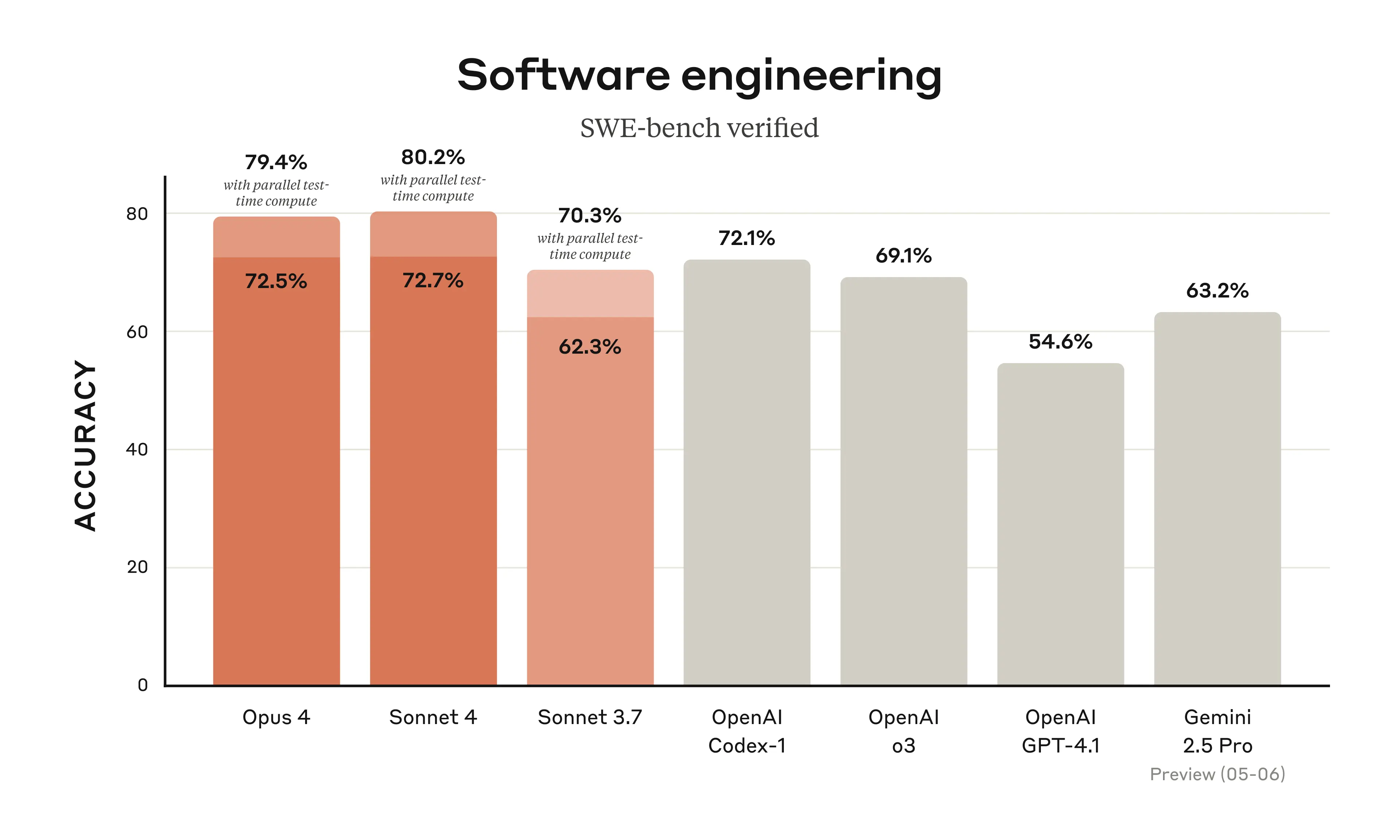
Microsoft's internal studies show teams using GitHub Copilot X are shipping features 73% faster than control groups. Adobe reported that their designers paired with Adobe Firefly and Illustrator AI are producing 3.5x more design variations for clients—with higher approval rates.
But here's what's really interesting: AI isn't replacing these roles—it's transforming them. The highest-performing engineers aren't the ones who memorized algorithms; they're the ones who excel at:
- Problem framing - Defining what actually needs to be built
- System architecture - Understanding how pieces fit together
- Prompt engineering - Effectively directing AI tools
- Quality control - Knowing when the AI output needs refinement
As Marc Andreessen noted at the latest a16z summit: "The bottleneck is no longer implementation—it's specification. The people who can clearly articulate what needs to be built are now the kingmakers."
What Actually Happened in AI (And Why You Need to Pay Attention)
Let's talk about the last 90 days, because the pace of innovation is staggering.
Remember when Multi-modal AI was the bleeding edge? Now it's table stakes. Every major platform can seamlessly process text, images, and audio inputs. But more importantly, they can reason about the relationships between these modalities in ways that weren't possible even a year ago.
In February, OpenAI quietly released GPT-4.5 Turbo with what they call "persistent reasoning"—basically the ability to maintain complex chains of thought across long conversations without forgetting context. Initial reports show 42% improvement in complex reasoning tasks over its predecessor.
Not to be outdone, Anthropic's Claude 3.7 Sonnet introduced "reasoning mode," which essentially forces the model to think through problems step-by-step before responding, reducing mathematical errors by an astounding 86%.
Meanwhile, Google's Gemini 2.0 continues to lead in multimodal capabilities—watching, understanding, and commenting on videos in real-time at near-human accuracy.
The pattern is clear: AI systems are getting dramatically better at tasks requiring:
- Extended reasoning
- Context retention
- Multi-step problem solving
- Cross-modal understanding
These improvements aren't incremental—they're transformative. Tasks that were "AI-resistant" just months ago are now firmly within AI's capabilities.
But the real star of the show? Cost. The processing power required to run these models has plummeted. Enterprise-grade AI operations that cost $10,000/month in early 2024 now run for under $3,000. By year's end, analysts expect another 40% drop.
AI vs. You: Are We Replacing Jobs Yet?
Let's be real: if your job consists primarily of:
- Data entry and extraction
- Basic content creation
- Standard code implementation
- Routine customer service
- First-level data analysis
Then yes, your job as it exists today is being automated. Not tomorrow—right now.
But every technological revolution eliminates certain roles while creating new ones. The question isn't whether jobs will disappear; it's whether you'll adapt to the new reality.
Take prompt engineering—a role that didn't exist three years ago. Today, skilled prompt engineers command $250K+ salaries because they can coax optimal performance from AI systems, saving companies millions in implementation costs.
Or consider AI ethics officers, embedded AI trainers, AI-human workflow designers, and AI performance optimizers—all high-paying roles born from this technology shift.
The World Economic Forum's latest Employment Outlook report estimates that while AI will displace 85 million jobs by 2026, it will create 97 million new ones. But here's the catch: the new jobs require fundamentally different skills.
"We're not hiring for coding skills anymore. We're hiring for creativity, critical thinking, and the ability to work with AI tools. Everything else we can teach—or more likely, have the AI teach." - CTO at a Fortune 500 company
Navigating the Future: Nvidia, Politics, and the AI Arms Race
Hardware constraints were supposed to slow AI development. Then Nvidia dropped the Blackwell Ultra architecture, delivering 4x the performance of the previous generation at 40% less power consumption.
The result? Training costs for large language models plummeted by 62% in just one quarter. Companies that had shelved ambitious AI projects due to cost constraints are now racing to implement them.
Meanwhile, the global AI arms race has intensified. China's massive investment in domestic chip production threatens U.S. dominance. The EU's AI Act establishes the strictest regulatory framework yet. And the U.S. continues to wrestle with balancing innovation and oversight.
The political dimension cannot be ignored. The Trump administration has signaled its intention to slash AI regulations while increasing support for domestic chip production. This has accelerated the timeline for AI adoption across industries, as companies rush to implement systems before potential regulatory changes.
For business leaders, this means:
- Geopolitical awareness is now a business requirement - Understanding how global AI politics affects your technology stack is non-negotiable
- Hardware strategy matters - Access to advanced computing will remain a competitive advantage
- Regulatory arbitrage is real - Companies are already shifting AI operations to jurisdictions with favorable regulatory environments
| AI Implementation Area | Current Capability | Business Impact |
|---|---|---|
| Code Generation | 73% faster development | Reduced time-to-market |
| Content Creation | 3.5x more variations | Enhanced creative output |
| Data Analysis | Complex reasoning chains | Better decision making |
| Customer Service | Near-human interactions | 24/7 availability |
How to Actually Implement AI In Your Business
Most AI implementation advice falls into two categories: absurdly general ("embrace AI!") or impractically specific ("here's how to run this exact prompt").
Instead, let me offer a framework that's actually useful:
- Start with automatable decisions, not processes
- Build small, measure relentlessly
- Optimize for human-AI collaboration
- Invest in internal AI literacy
- Build proprietary data advantages
AGI & ASI: Can AI Solve Our Biggest Problems?
Let's address the elephant in the room: Artificial General Intelligence (AGI)—systems with human-level intelligence across all domains—and Artificial Superintelligence (ASI)—systems smarter than human experts in all fields.
In 2024, there was heated debate about whether GPT-5 was going to represent "weak AGI." In 2025, that debate seems almost quaint. Current systems still fall short of true AGI, but the capabilities gap is narrowing rapidly.
DeepMind's latest research suggests AGI could arrive between 2026-2028—far sooner than the 10+ year timeline experts predicted just 18 months ago.
But speculating about AGI's arrival date misses the more important question: what will we do with these increasingly powerful systems?
Can AI solve poverty? Climate change? Disease? The answer depends less on technical capability and more on how we deploy these tools. An AI system could theoretically design more efficient resource distribution systems to address poverty, but implementation requires political will and social acceptance.
What's clearer is that companies and countries preparing for advanced AI today will have enormous advantages tomorrow. The competitive gap between AI adopters and laggards continues to widen.
As Sam Altman recently noted, "The economic impact of AGI will make the industrial revolution look like a minor footnote in human history." Whether that's hyperbole or prescience remains to be seen—but betting against AI advancement has been consistently wrong.
How to Stay Ahead in the AI Revolution
The AI landscape will continue evolving at breakneck speed. Here's how to ensure you're not left behind:
- Identify one workflow in your organization to pilot an AI integration within the next quarter - This doesn't need to be ambitious—start with something concrete and measurable. Document the process, the challenges, and the results.
- Set up monthly AI-update briefings for your team - The field moves too quickly for quarterly or annual reviews. Monthly is the minimum to stay current.
- Develop an AI capability roadmap - Plot existing AI tools against your business needs, identifying gaps and opportunities. Update this roadmap quarterly as new capabilities emerge.
Remember: the goal isn't to use AI everywhere. It's to apply it strategically where it creates genuine competitive advantage. The companies winning the AI race aren't necessarily using the most advanced technology—they're applying the right technology to the right problems.
The future belongs to those who understand not just what AI can do, but what it should do for their specific business. That future has already arrived—it's just not evenly distributed yet.
Are you ready to claim your share?
Related Insights


Disclaimer
The information provided in this article is intended for informational purposes only and does not constitute specific legal or tax advice. It reflects our understanding of the law at the time of publication but should not be relied upon without professional consultation. For personalized guidance related to the topics discussed, please contact an Andersen professional.
Ready to Implement AI in Your Business?
Our team of digital transformation specialists can help your business navigate the AI landscape and develop a strategic implementation roadmap. Contact us for personalized guidance on AI integration.